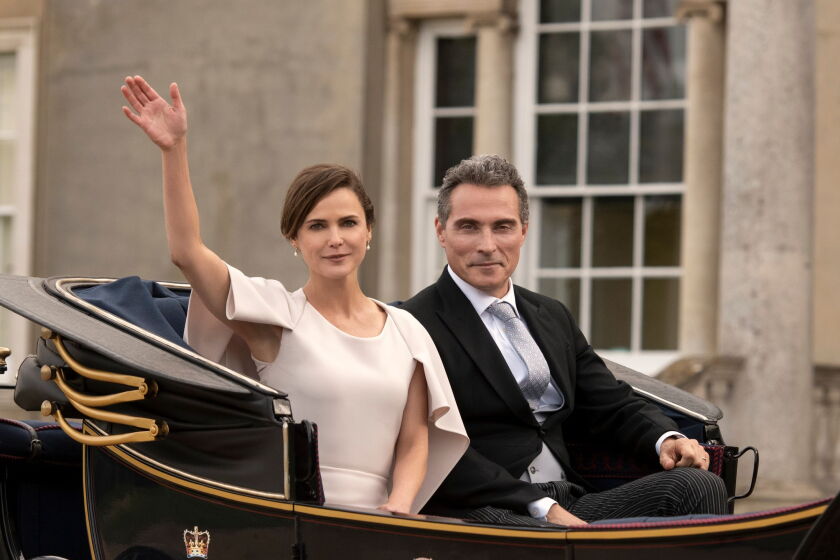
When it was originally on: 2023-present
Original network: Netflix
Where you can stream it now: Netflix
Had I seen it before: Nope, never seen this one.
What IMDb says: In the midst of an international crisis, Kate Wyler, a career diplomat, lands in a high-profile job for which she is not suited, with tectonic implications for her marriage and her political future.
Why I picked it: The Diplomat isn’t necessarily a HUGE hit, but it’s perhaps the most successful of any recent Netflix attempt at “prestige drama.” At the same time, it still feels far less successful than the prestige dramas that initially put Netflix on the map as an original content powerhouse more than a decade ago, your House of Cards, your Orange is the New Black, etc. The most recent season was nominated for Best Drama Series at the Emmys, and I hear a decent amount of buzz from critics and the like, but no one in my actual life has ever said to me “you know what I’m watching right now and loving? The Diplomat.”
That split between what plugged-in TV people are watching vs. what the rest of us are watching has always been interesting to me, but The Diplomat also represents a case study for where Netflix is now regarding these kinds of shows. Since the House of Cards days, their strategy has become more about making a lot of shows that each cater to different niches vs. trying to make the one big show everyone is talking about. While they’ve had more populist hits like Bridgerton and Wednesday, and are also holding their own in the limited series department with things like Baby Reindeer and Adolescence, they seem to have fallen behind HBO and Apple TV when it comes to these multi-season drama series. The Diplomat is evidence they haven’t given up on them altogether, but that they may not be marketing them the way they once did. Or, is it just not up to par with more talked-about shows like Severance or The Pitt?
What I liked: The overall concept is super interesting: what if a diplomat who was used to working in Afghanistan had to work in England instead? It’s a world I don’t know and have never given much thought to before, but exploring how the job of ambassadors can be so different based on which country they work in sounds awesome, and like something I haven’t seen on TV before.
The central relationship between Kate and Hal also has a million and one facets to it already and I’m excited to see how they explore it. They’re both in the same line of work, but have totally different approaches to it. Hal is connected enough to “help” Kate in her work, but Kate doesn’t necessarily want him to, not that that’s going stop Hal. I had all these thoughts even before the reveal at the end that Kate has decided to divorce Hal and they’re faking it for the cameras.
I do think the twist of their marriage being on the rocks works though. Much like with diplomacy, they have entirely different perspectives on what the marriage is. Kate seems to have given up entirely, but Hal seems to think it’s salvageable. Even if the marriage isn’t, Hal is committed to the project of Kate eventually becoming Vice President and thinks she’d be good for the United States, He plans to work towards those ends even though Kate would probably hate being Vice President based on what we know so far. Kate also seems like the type who’s so engrossed in her work, it’s hard to picture her with any kind of partner outside of that world. She might not like Hal per se, but he might be the only partner that could ever understand her.
What I’m mixed about: This is a new category to my template that I’ve never used before in nearly 200 TV pilot reviews, and may never use again. However, we have to talk about the conceit that Kate is unknowingly auditioning for the role of Vice President and I still don’t know how I feel about it. In some ways, I like it because it explains the decision to send Kate to England. It reminds me of Ted Lasso. Ultimately the point of that show is to watch an American football coach attempt to coach an English soccer team, but since no sensible person would decide to make that happen, we give the decision-maker an ulterior motive for that choice. Here, the point is watching a diplomat who’s good at one type of diplomacy in Afghanistan have to do another type of diplomacy in England, but why would the State department make such an abrupt change to Kate’s assignment? Boom! They think she could be Vice President but have to make sure she can do the graceful, public-facing bullshit that comes with that job.
But… it also feels unnecessarily contrived and renders Kate a piece on someone else’s chess board rather than an interesting lead making her own choices. Mayyybe that’s the point and is going to pay dividends later? Right now it’s hard to say. Also, the thought of a random diplomat being the President’s choice for vice president doesn’t make a ton of sense. There’s literally no member of Congress, no governor, no cabinet member that would be next in line for that job, just some diplomat?
Part of why this is in the mixed category is the show does make some kind of attempt to explain its logic: the politicians who are good at winning elections aren’t good at actually governing. Ergo, someone with lots of boots-on-the-ground experience like Kate who has no ego, no interest in being in the public eye, would actually be an asset. But… would any sitting president have the opinion of “elected politicians can’t do good work?” If the point here was to explain a State department decision that doesn’t make a ton of sense, that’s a noble goal, but then the explanation just leaves me with new questions about other things that don’t make sense.
What I didn’t like: I get that the whole point here is that Kate isn’t good at all the pomp and circumstance of UK ceremonial stuff; it’s supposed to be a fish-out-of-water story. That said, it takes a LOT of audacity to ask me to believe that someone behaving the way Kate behaves here is good at being a diplomat. At times, she seems openly hostile about British customs. She’s rolling her eyes at things that mean a lot to them and not even trying to be subtle about it. This is sometimes in front of people she barely knows. But yet the show insists she’s soooo good at diplomacy and has soooo much experience?
Am I to believe that at no point in her Afghanistan diplomacy did she ever have to bite her tongue in polite company? It’s just hard to believe that anyone who is a competent diplomat for any country wouldn’t be able to hid her displeasure with a situation she personally finds annoying and stupid. While she does this well enough in front of higher ups like the British Prime Minister and Foreign Secretary, she’s just downright rude to some of the other American staffers she deems beneath her. And her off-hand quips also aren’t funny enough to justify tanking your lead’s credibility. They also haven’t made her unlikeable in an interesting enough way for me to call her an anti-hero.
I feel like a better version of this would beher trying her best to hid her discomfort, but it shows through without snarky dialog. She’s nice to the various officials she meets, but whines to Hal. She finds more, well, diplomatic language for explaining why she doesn’t want to wear the right clothes or do the media hits that are planned for her. I just need to believe this woman is good at her job for the show to work, for me to believe they’re scouting her as a potential Vice President, and I just don’t get that from the pilot.
Do I want to watch Ep. 2?: Yes. This is one where you think you have a handle on the show they’re making, then in the last five minutes they blow it up and say “actually it’s going to be this show instead.” That leaves me cautiously optimistic that the show could still iron out any kinks and be genuinely good. It’s also one that has made enough bold choices already that I could see it going so far off the rails it becomes entertaining in an unintentional way a la The Morning Show.

